
Use coupon code “MARCH20” for a 20% discount on all items! Valid until 31-03-2025

Site Logo
Search Suggestions

      Royal Mail  express delivery to UK destinations

      Regular sales and promotions

      Stock updates every 20 minutes!

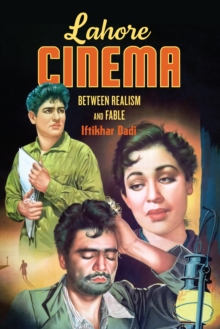
      Lahore Cinema: Between Realism and Fable

      1 in stock

      Firm sale: non returnable item
      SKU 9780295750811 Categories ,
      Select Guide Rating
      A pioneering analysis of exemplary feature filmsCommercial cinema has been among the most powerful vectors of social and aesthetic modernization in South Asia. So argues Iftikhar Dadi in his provocative examination of cinema produced between 1956 and 1969—the long sixties—...

      £27.99

      Buy new:

      Delivery: UK delivery Only. Usually dispatched in 1-2 working days.

      Shipping costs: All shipping costs calculated in the cart or during the checkout process.

      Standard service (normally 2-3 working days): 48hr Tracked service.

      Premium service (next working day): 24hr Tracked service – signature service included.

      Royal mail: 24 & 48hr Tracked: Trackable items weighing up to 20kg are tracked to door and are inclusive of text and email with ‘Leave in Safe Place’ options, but are non-signature services. Examples of service expected: Standard 48hr service – if ordered before 3pm on Thursday then expected delivery would be on Saturday. If Premium 24hr service used, then expected delivery would be Friday.

      Signature Service: This service is only available for tracked items.

      Leave in Safe Place: This option is available at no additional charge for tracked services.

      Description

      Product ID:9780295750811
      Product Form:Paperback / softback
      Country of Manufacture:GB
      Series:Lahore Cinema
      Title:Lahore Cinema
      Subtitle:Between Realism and Fable
      Authors:Author: Iftikhar Dadi, Padma Kaimal
      Page Count:264
      Subjects:Film history, theory or criticism, Film theory & criticism, Asian history, Asian history, Indian sub-continent
      Description:Select Guide Rating
      A pioneering analysis of exemplary feature filmsCommercial cinema has been among the most powerful vectors of social and aesthetic modernization in South Asia. So argues Iftikhar Dadi in his provocative examination of cinema produced between 1956 and 1969—the long sixties—in Lahore, Pakistan, following the 1947 Partition of South Asia. These films drew freely from Bengali performance traditions, Hindu mythology, Parsi theater, Sufi conceptions of the self, Urdu lyric poetry, and Hollywood musicals, bringing these traditions into dialogue with melodrama and neorealism. Examining this layered context offers insights into a period of rapid modernization and into cultural affiliation in the South Asian present, when frameworks of multiplicity and plurality are in jeopardy. Lahore Cinema probes the role of language, rhetoric, lyric, and form in the making of cinematic meaning as well as the relevance of the Urdu cultural universe to midcentury Bombay filmmaking. Challenging the assumption of popular cinema as apolitical, Dadi explores how films allowed their audiences to navigate an accelerating modernity and tense politics by anchoring social change across the terrain of deeper cultural imaginaries. By constituting publics beyond social divides of regional, ethnic, and sectarian affiliations, commercial cinema played an influential progressive role during the mid- and later twentieth century in South Asia. Lahore Cinema is freely available in an open access edition thanks to TOME (Toward an Open Monograph Ecosystem) and the generous support of Cornell University. DOI: 10.6069/9780295750804

      A pioneering analysis of exemplary feature films

      Commercial cinema has been among the most powerful vectors of social and aesthetic modernization in South Asia. So argues Iftikhar Dadi in his provocative examination of cinema produced between 1956 and 1969—the long sixties—in Lahore, Pakistan, following the 1947 Partition of South Asia. These films drew freely from Bengali performance traditions, Hindu mythology, Parsi theater, Sufi conceptions of the self, Urdu lyric poetry, and Hollywood musicals, bringing these traditions into dialogue with melodrama and neorealism. Examining this layered context offers insights into a period of rapid modernization and into cultural affiliation in the South Asian present, when frameworks of multiplicity and plurality are in jeopardy.

      Lahore Cinema probes the role of language, rhetoric, lyric, and form in the making of cinematic meaning as well as the relevance of the Urdu cultural universe to midcentury Bombay filmmaking. Challenging the assumption of popular cinema as apolitical, Dadi explores how films allowed their audiences to navigate an accelerating modernity and tense politics by anchoring social change across the terrain of deeper cultural imaginaries. By constituting publics beyond social divides of regional, ethnic, and sectarian affiliations, commercial cinema played an influential progressive role during the mid- and later twentieth century in South Asia.

      Lahore Cinema is freely available in an open access edition thanks to TOME (Toward an Open Monograph Ecosystem) and the generous support of Cornell University.

      DOI: 10.6069/9780295750804


      Imprint Name:University of Washington Press
      Publisher Name:University of Washington Press
      Country of Publication:GB
      Publishing Date:2022-11-08

      Additional information

      Weight414 g
      Dimensions152 × 228 × 20 mm